"Caring for myself is not self-indulgence, it is self-preservation, and that is an act of political warfare." | Audre Lorde
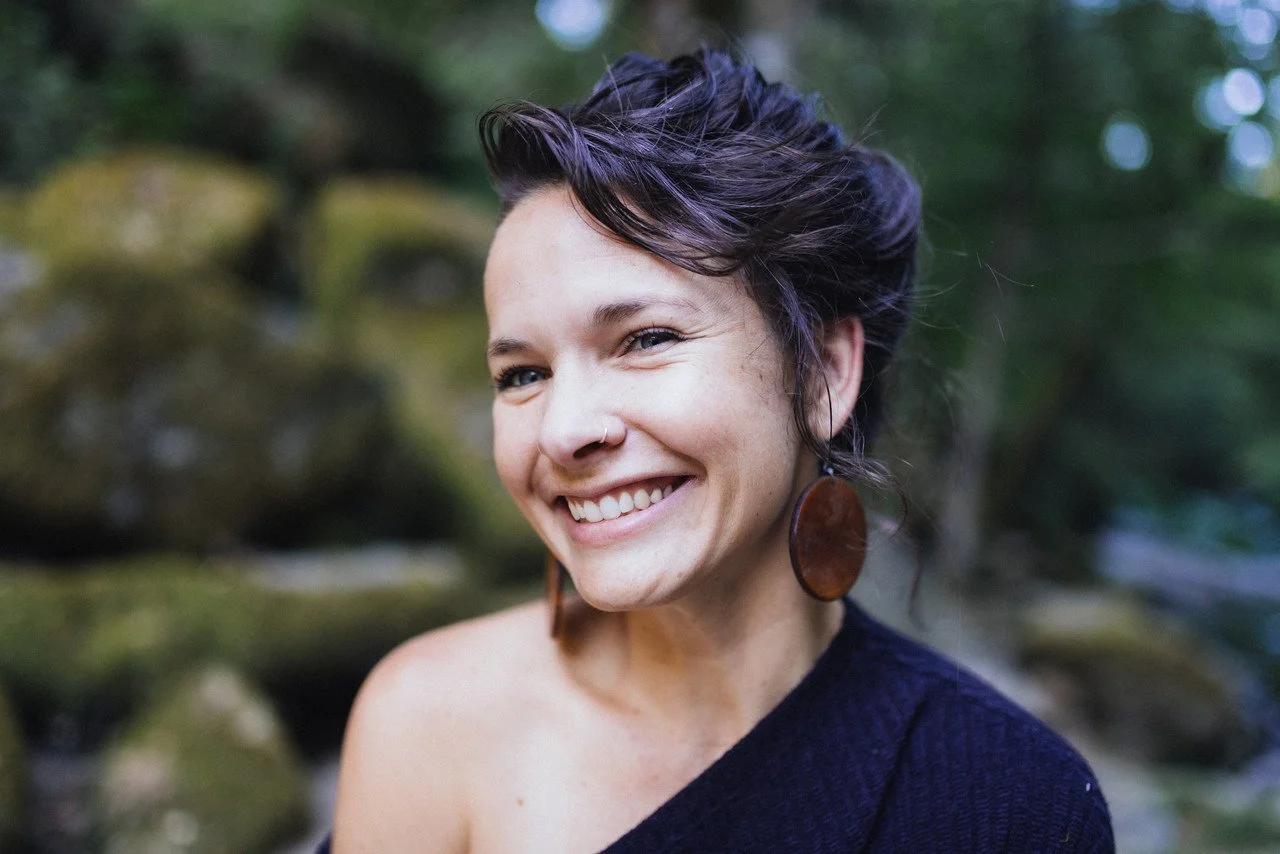
I became a therapist through crisis work, not in spite of it.
Before I had a private practice, I spent nearly a decade doing crisis intervention, which is the kind of work that can drop you into the worst moments of someone's life and asks you to hold steady. My experience spans from peer support at large events, to ER/hospital-based mental health evaluations, to mobile crisis, and finally to volunteer firefighting and serving on our local CISM team.
What I have learned has shaped everything about how I practice now: that the people who show up most reliably for everyone else are often the ones with the least room to fall apart; that hypervigilance isn't a character flaw, it's a nervous system doing exactly what it was trained to do; and that healing rarely looks like the ways that we’ve been told it works.
I'm a Licensed Marriage and Family Therapist (CA LMFT #161321) with specialized training in trauma, depth psychology, and somatic approaches. I earned my degree in Counseling Psychology with an emphasis in Depth Psychology from Pacifica Graduate Institute.
I often attract those that work on the edge and live on the fringe. Those first on scene, those who answer the call, those educating and leading — all who tend to be people who are competent, committed, and often quietly exhausted in ways they can't quite explain to the people around them. Whether the stress of just living and being has created a hollow void inside of you, or its spilled into your personal life in ways that feel irreparable, I carry deep understanding of how complicated the intersections of stress can be.
What I actually do in sessions
My training includes Brainspotting, Cognitive Processing Therapy (CPT), Critical Incident Stress Management (CISM), ketamine-assisted psychotherapy (KAP), somatic and body-based approaches, parts work, and narrative therapy - all grounded in attachment theory, polyvagal science, and harm reduction. I care about what works clinically and what something actually means to the person in front of me.
In practice, that means I'm not precious about method. I work at the intersection of evidence-based trauma treatment modalities and a depth orientation, because the “either/or” tends to miss something real. Symptom relief matters, and so does understanding why you built the coping strategies you did, and what it might look like to carry less of that weight.
I live in the “both/and”; walking side by side with clients towards a more grounded, compassionate, and accepting sense of self and the world.
Your nervous system has been working overtime for a long time, and I’d like to work with you to restore your faith in the fact that it isn't broken.
Who I work well with
If you've spent years being the capable one, the person others call in a crisis, the one who manages their own distress quietly so they can keep functioning - you probably already know that asking for help doesn't always come naturally. Maybe you've tried therapy before and felt like you had to translate yourself into a language the therapist could understand. Maybe you're just tired in a way that's hard to explain, and the burnout just feels bone-deep, almost like part of your identity at this point. Those are exactly the folks I work best with.
You don't have to come in with everything figured out or perform insight to prove you're doing it right.
First sessions are straightforward. Tell me what's going on, in your own words, and we'll figure out together whether I'm the right fit. No ice-cold intake formality. No checklist. Just a conversation, with a lot of curious questions from me to you. Most folks say it feels like a gift in itself - for someone to be just so damn interested.
For the folks who are living more in the fringe, I am trans-affirming, kink-aware, and poly-friendly. I take harm reduction seriously, which means I'm not interested in shame or judgment in regards to how you use substances or what vices you’ve picked up along the way. I'm interested in how it actually serves you, and what we need to do to get you into what you deem as right-relationship.
My practice is in Nevada County, California. I offer both in-person and telehealth sessions, and I accept some insurance plans and will gladly offer superbills for insurance reimbursement.
If you feel as though we may be a good fit, it’s worth a shot. Reach out!
My role as a therapist
Experiential foundations I lean into for treatment:
-
I completed master’s level training through Pacifica Graduate Institute, and depth psychology is woven throughout how I understand and work with clients. Rather than treating symptoms as problems to eliminate, I approach them as meaningful communications from the psyche worth exploring. We enter into the archetypal.
This is particularly resonant for first responders and veterans navigating moral injury, identity disruption, and the shadow material that accumulates in high-stakes service work. There can be solace in seeking to understand the mythic or symbolic nature of experiences.
Depending on the client, this can involve dream work, active imagination, or simply holding space for the parts of a person's experience that don't fit neatly into their professional identity. -
Attachment theory serves as the foundational lens through which I understand and approach all clinical work. I view the therapeutic relationship itself as a corrective attachment experience, particularly for clients whose occupational roles, trauma histories, or cultural contexts have conditioned them to suppress vulnerability and distrust support.
For those shaped by high-stakes relational environments, attachment patterns often show up in specific, recognizable ways, and naming them within a safe therapeutic relationship can be profoundly orienting.
-
ACT is less about controlling difficult thoughts and feelings and more about changing your relationship to them. Rather than fighting to eliminate distress, we work on building psychological flexibility, which is the ability to make room for hard internal experiences while still moving toward what matters to you. This tends to resonate with clients who've spent years white-knuckling their way through, and who are ready to stop treating every difficult emotion as a problem to be solved. It pairs naturally with somatic and values-based work, and it's especially useful when the goal isn't "feel less" but "live more fully anyway."
-
I've been a Brainspotting practitioner since 2022 and use it as a primary trauma processing modality, particularly with clients where traditional talk therapy hits a ceiling, as it usually does. Trauma needs an integrative approach, and that includes getting into your body.
Brainspotting works directly with the subcortical brain where trauma is stored, making it especially effective for first responders, veterans, and healthcare providers carrying occupational trauma and moral injury that's hard to reach through words alone. It's also a strong fit for clients who are analytically oriented but find themselves stuck despite good insight. Insights learned through mindfulness and somatic awareness can be powerful in jump starting a new lease on life.
-
CPT is a structured, evidence-based treatment developed specifically for PTSD, with a strong track record among veterans and first responders. It focuses on the stuck points, or the beliefs about safety, trust, control, and self-worth that trauma quietly rewrites, working to to loosen their grip through targeted cognitive work. I use CPT when a client benefits from a clear, focused framework for processing a specific trauma, and I integrate it alongside relational and somatic approaches rather than running it as a rigid protocol. For people who appreciate structure and want to understand how an event reshaped their thinking, it can be a powerful entry point to the work.
-
Integrative therapy means no single method gets treated as the answer for everyone. Instead, I draw from multiple evidence-based approaches such as: somatic work, parts-based therapy (IFS), BSP, and CBT, and combine them based on what you actually need.
Trauma lives in more than just your thoughts, it lives in your body and your nervous system too. So some sessions are talk-based, while others aren't. The method follows the person, not the other way around.
-
For clients who have tried conventional approaches without sufficient relief, KAP offers a different entry point. Ketamine can soften psychological defenses and create space for deeper therapeutic work. The medicine is never the whole treatment.
Preparation, the session itself, and integration together are what make it meaningful. -
I draw on psychodynamic theory to understand how your unconscious patterns and relational history show up in your present experience. It means that: Yes, I will be asking about your relationship to your mother.
This approach pairs well with trauma work and is particularly useful for clients who benefit from understanding the why behind their responses, not just the what.
For many people, especially high-functioning professionals, insight itself can be a massive part of the healing.
-
I draw on Trauma-Focused CBT as an integrated framework rather than a rigid protocol, weaving cognitive and behavioral techniques into broader trauma treatment as clinically appropriate. This allows me to offer structured, evidence-based interventions for clients who benefit from psychoeducation, cognitive restructuring, and skill-building while still honoring the relational and somatic dimensions of trauma recovery.
It translates particularly well with people who tend to appreciate a direct, skills-oriented approach alongside deeper processing work.
Reach out
Questions, curiosities, or interested in working together? Fill out some info and I will be in touch shortly. Please anticipate a response within 2-5 business days.
I look forward to connecting with you.